The stars, moon, and sun
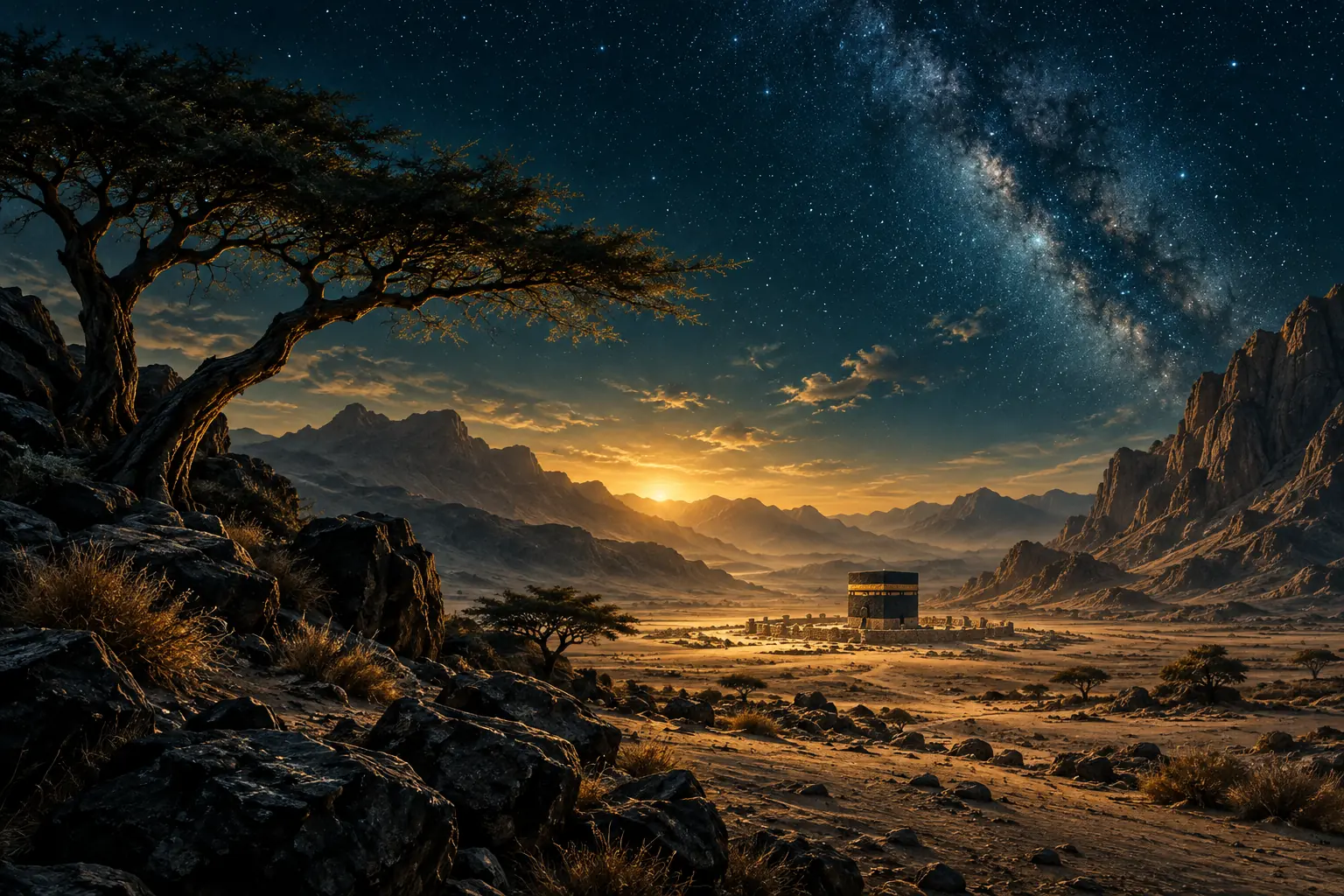
The Qur’an records Ibrahim’s rejection of his father’s idols and his observation of a star, the moon, and the sun. Each disappears from view. The argument culminates in his declaration of turning toward the Creator of the heavens and earth rather than associating partners with Him.
The people dispute with him, but he questions their fear of abandoning partners that have no divine authority. The account contrasts the created world with its Creator. The signs in the sky are not independent powers to be worshipped.
Commentators discuss the rhetorical setting of this episode, including its role as an argument against the people’s beliefs. This collection does not turn it into an unsupported claim that Ibrahim first worshipped celestial bodies before becoming a prophet. The learning sequence is the textual one: observe what changes, question misplaced worship, and recognize the Creator beyond the changing creation.
Read the source
Original retelling, not a translation. Read the complete passages and tafsir alongside it.
What rises and sets cannot be the ultimate object of worship.
Editorial reflection on the account.